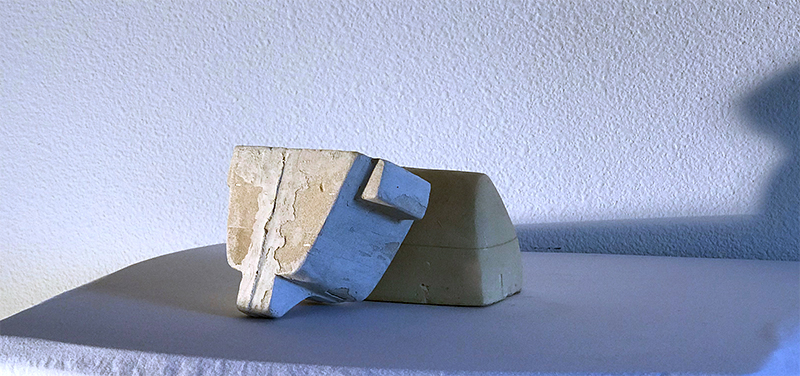
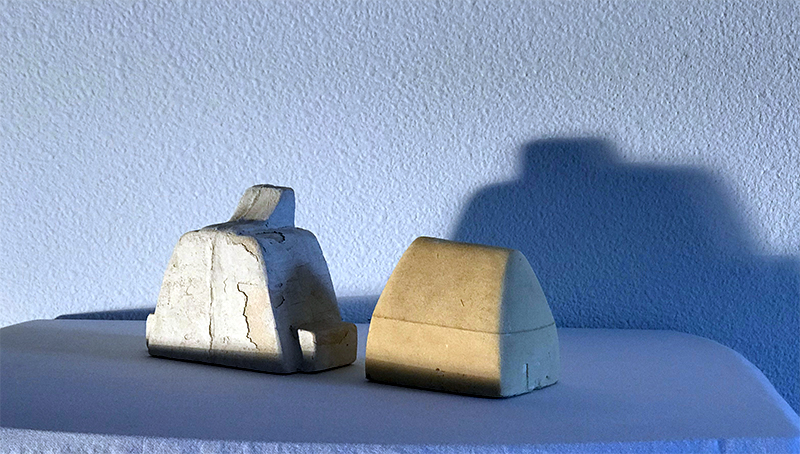
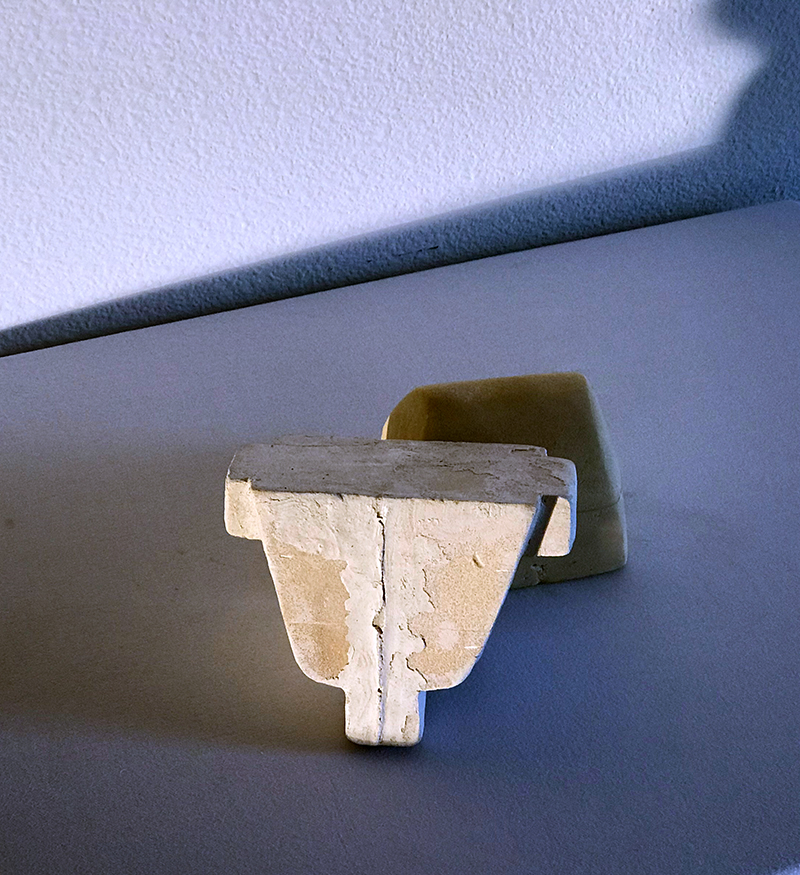
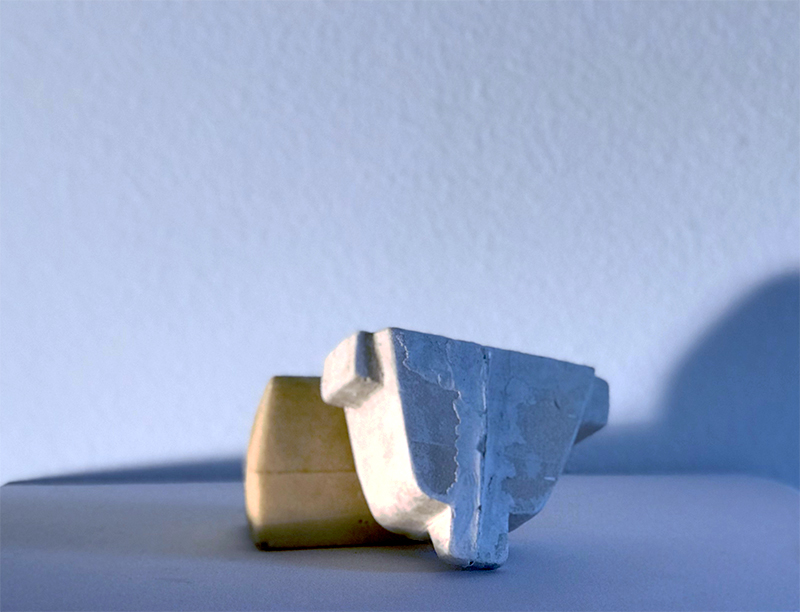
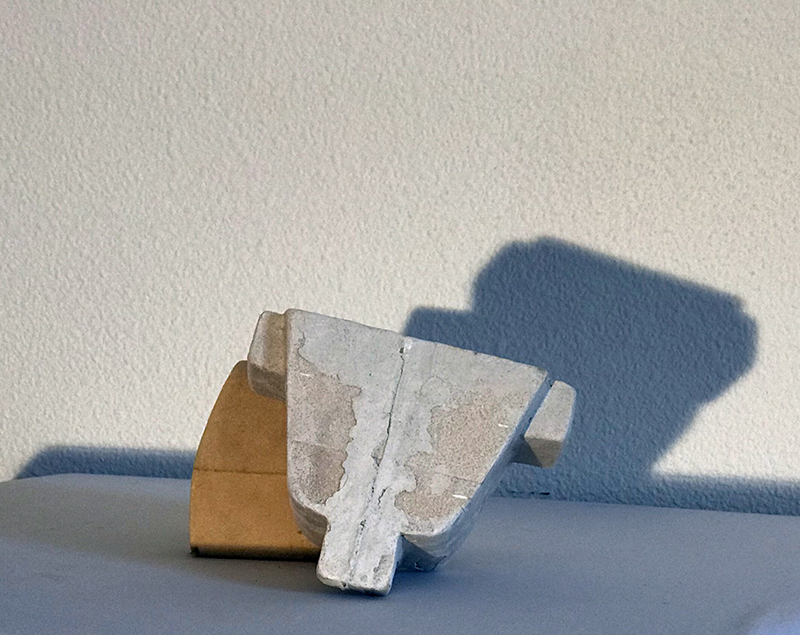
These are foam molds that were shaped and rendered with Exacto blades, steel wire, and dental cleaning tools. A two-dimensional outline is printed and glued on a foam block, and consequently, a three-dimensional shape is carved out of this. Various iterations can occur before a perfect mold is produced because even the slightest mistake will render a mold useless. Corners and angles are particularly difficult to shape. You can use different grade sandpaper to gradually define the surface and texture of the mold. Once the mold is ready it is housed in a wooden box made with individual planks and sealed with clay. Ultimately plaster is prepared and poured into the mold box and left to cure overnight. The end result is a plaster mold negative that can serve to pour ceramics.
 Adanatlas